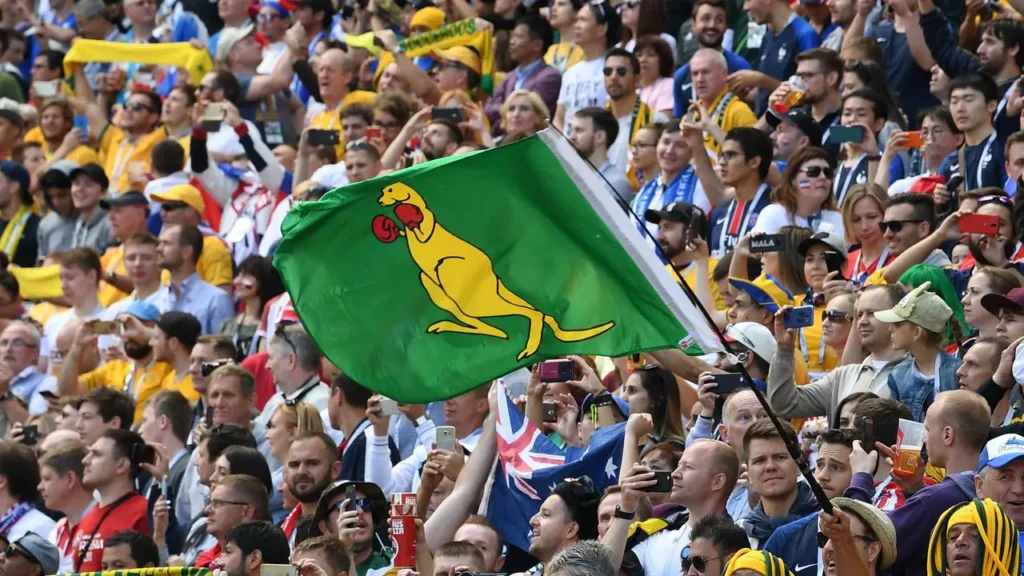

The Rugby League World Cup 2026 is quietly shaping up to be one of the most intriguing international tournaments the sport has seen in years. While rugby league doesn’t always grab global headlines in the same way as football, this World Cup arrives at a moment where the international game is deeper, more competitive, and tactically sharper than many casual fans realise.
For Australian supporters, the stakes are obvious. The Kangaroos remain the benchmark, but the gap is no longer what it once was. Nations like England, New Zealand, Tonga and Samoa are no longer novelty challengers — they are structured, physical and increasingly sophisticated. This article takes an analysis-first approach, breaking down how Rugby League World Cup 2026 is likely to unfold, how the rules and format influence tactics, and how data, odds and match indicators can be read sensibly.
Broader international tournament context and scheduling updates can be tracked via worldcup20-26
What Is the Rugby League World Cup 2026?
The Rugby League World Cup 2026 is the premier international competition for the 13-a-side code, bringing together the strongest national teams from the Southern Hemisphere, Europe and emerging regions. Unlike club competitions, this tournament compresses elite talent into short campaigns where preparation time is limited and margins are brutally thin.
For fans used to the NRL’s week-to-week grind, World Cups feel different. Defensive patience replaces constant offloads, kicking games become more conservative, and field position matters more than highlight-reel moments. Understanding that shift is key to enjoying the tournament properly.
Tournament Format: Why Structure Shapes Behaviour
While final details continue to be refined, Rugby League World Cups typically feature a group stage followed by knockout rounds. What matters is not just who plays who, but how qualification incentives shape decision-making on the field.
Key format dynamics
- Group matches prioritise points and points difference
- Early blowouts can influence later tactical choices
- Knockout rounds heavily reward discipline and kicking control
- Bench rotation becomes more conservative as the tournament progresses
From an analytical standpoint, this explains why some matches feel cagey. Teams aren’t playing scared — they’re managing risk across a short competition where one mistake can end a campaign.
Why Australia Remains the Benchmark (But Not Untouchable)
Australia enters Rugby League World Cup 2026 as the measuring stick. Depth across the spine, elite kick pressure, and defensive cohesion keep the Kangaroos at the top. However, international footy has changed.
What still separates Australia
- Superior last-tackle kicking options
- Faster defensive line speed
- Bench players who maintain intensity
- Experience in managing knockout pressure
The difference now is that challengers can match Australia physically for longer stretches. That shifts contests from pure dominance to territory, patience and execution.
The Rising Threats: England, New Zealand and the Pacific Nations
The international rugby league landscape is deeper than it was even a decade ago. England’s Super League pipeline, New Zealand’s hybrid NRL system, and the explosive Pacific Island squads have narrowed gaps that once felt permanent.
What makes these teams dangerous
- Size and power through the middle third
- Second-phase offloads creating broken-field chaos
- Emotional momentum swings
- Improved kicking games under pressure
Against these sides, Australia’s margin comes down to discipline and patience rather than brute force.
Rule Interpretations That Matter in World Cup Play
Rugby league rules don’t change dramatically for World Cups, but interpretations often tighten. Referees tend to allow fewer grey-area tactics, especially around ruck speed and marker interference.
Key officiating trends to watch
- Stricter policing of slowing the ruck
- Reduced tolerance for escorting on kicks
- Increased scrutiny of high-contact tackles
- Less leniency late in close matches
These factors subtly favour teams with structured defence and clean technique over those relying on chaos alone.
Tactical Trends Likely to Define Rugby League World Cup 2026
World Cup rugby league is about reducing variables. Coaches lean into systems that survive pressure rather than flashy set plays.
Field position over flair
Expect heavy emphasis on long kicking games, corner trapping, and kick-chase discipline. Teams that consistently start defensive sets inside their own 20 struggle to maintain control over 80 minutes.
Compressed defensive lines
Slide defence and compressed middles limit offloads. This pushes attacking sides wide, increasing kick-to-corner frequency rather than risky passes.
Bench impact as a weapon
Short, high-impact stints from middle forwards often decide matches. Fresh legs around the ruck create penalties and quick play-the-balls that swing momentum.
Data That Actually Matters in Rugby League World Cups
Not all stats are equal in international tournaments. Some numbers travel well between opponents; others are inflated by mismatches.
| Metric | Why It Matters | What To Ignore |
|---|---|---|
| Post-contact metres | Indicates ruck dominance | Total run metres |
| Kick return metres | Shows field-position recovery | Highlight breaks |
| Penalties conceded | Reflects discipline under fatigue | Tackle counts alone |
Odds, Indexes and How Analysts Read the Market
Odds around Rugby League World Cup 2026 are best treated as expectation indicators rather than predictions. In Australia, decimal odds dominate coverage, but the story often lies in movement rather than price.
Market shifts usually follow team announcements, late injury news, or weather forecasts that favour grinding styles over open play. Sharp observers track these changes to understand perceived momentum rather than chasing certainty.
Comparing Rugby League World Cups to Other Global Events
While different sports, multi-nation tournaments share behavioural patterns. Fans tracking both rugby league and football often note similarities in risk management and knockout psychology.
For historical context and past tournament breakdowns, dedicated coverage is available at rugby league world cup, which highlights how strategies have evolved over time.
FAQ: Rugby League World Cup 2026 Quick Answers
When is the Rugby League World Cup 2026?
The tournament is scheduled for 2026, with final fixtures and venues confirmed closer to kickoff by organisers.
Is Australia still the favourite?
Yes, Australia enters as the benchmark, but England, New Zealand and Pacific nations are closer than ever.
What usually decides knockout matches?
Discipline, kicking accuracy, and bench impact are more decisive than attacking flair alone.
Final Take: Why Rugby League World Cup 2026 Is Worth Watching Closely
Rugby League World Cup 2026 won’t be about constant blowouts or highlight-heavy footy. It will be about control, patience, and execution under pressure. For Australian fans willing to look beyond the scoreboard, it offers one of the most tactically interesting international tournaments in years.
Watch the ruck speed, track the kicking game, and pay attention to discipline — that’s where this World Cup will be won and lost.
Editorial note: Any discussion of odds or markets is for informational purposes only. Always engage responsibly and through licensed providers.